Ground-Source / Geothermal Heat Pumps
Ground-source heat pumps, often called geothermal heat pumps, use the earth as a source of heat in winter and as a place to release heat in summer. This makes them different from air-source heat pumps, which exchange heat with the outdoor air.
The ground below the surface usually stays more stable in temperature than the air above it. A geothermal heat pump takes advantage of this stability to provide efficient heating and cooling for buildings.
How Ground-Source Heat Pumps Work
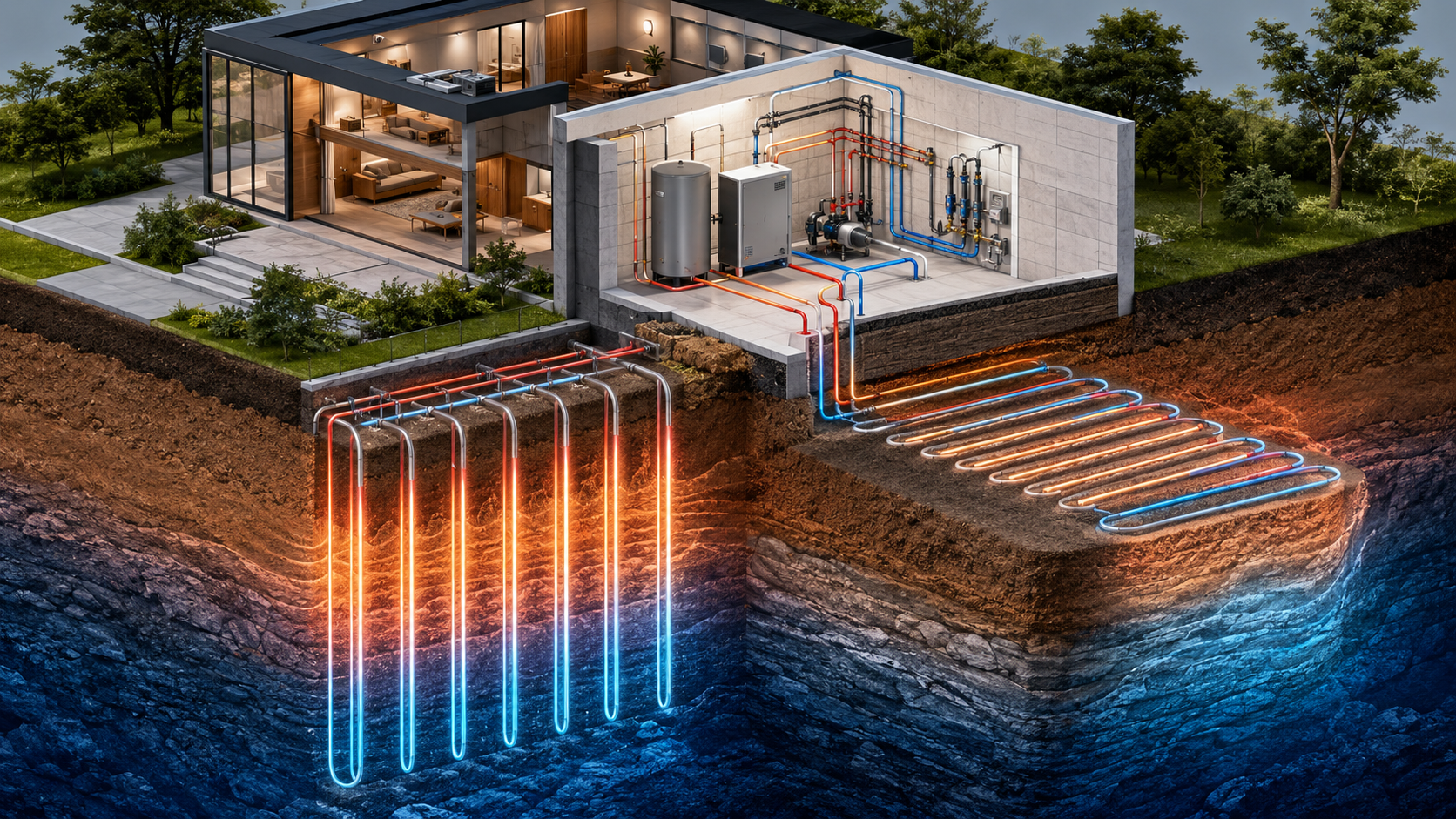
A ground-source heat pump system usually includes indoor equipment and a network of underground pipes called a ground loop.
In winter, the system absorbs heat from the ground and transfers it indoors. In summer, the process can reverse, moving heat from inside the building back into the ground.
The heat pump itself uses refrigerant, a compressor, and heat exchangers to move and upgrade heat, similar to other heat pump systems. The main difference is that the ground is used as the heat source or heat sink.
What Is a Ground Loop?
The ground loop is one of the most important parts of a geothermal system. It is a series of pipes buried underground. A fluid circulates through these pipes and transfers heat between the ground and the building.
Ground loops can be installed in different ways depending on the property, soil conditions, available space, and project budget.
Common Ground Loop Types
Horizontal Loop
Horizontal loops are placed in trenches below the ground. They may be suitable for properties with enough open land.
Vertical Loop
Vertical loops are installed in deep boreholes. They are often used when land area is limited, but drilling is required.
Pond or Lake Loop
In some cases, pipes can be placed in a nearby body of water if the site conditions are suitable.
Why Geothermal Systems Can Be Efficient
Ground-source heat pumps can be very efficient because they work with relatively stable ground temperatures. In winter, the ground is usually warmer than the cold outdoor air. In summer, the ground is usually cooler than hot outdoor air.
This temperature stability can help the heat pump operate more efficiently and provide consistent comfort throughout the year.
Benefits of Ground-Source Heat Pumps
Ground-source systems can offer several benefits. They can provide both heating and cooling, reduce energy use, and support lower-emission buildings when powered by cleaner electricity.
They also have less visible outdoor equipment compared with some air-source systems, because much of the heat exchange happens underground.
Things to Consider
Geothermal systems usually require more planning and a higher upfront installation cost than air-source heat pumps. The project may need excavation, drilling, site evaluation, and professional system design.
They may be a better fit for new construction, major renovations, larger properties, or long-term projects where energy performance and durability are important.
Before choosing a ground-source system, it is important to consider land availability, soil conditions, local regulations, installation cost, building size, heating and cooling demand, and payback period.
Ground-Source Heat Pumps and Sustainable Buildings
Geothermal heat pumps can work well with other sustainable building strategies. Good insulation, air sealing, high-performance windows, and efficient building design can reduce heating and cooling demand.
When the building needs less energy, the geothermal system can operate more effectively and support long-term building performance.
Final Thought
Ground-source heat pumps use the steady temperature of the earth to provide efficient heating and cooling. Although they may require more planning and upfront investment, they can be a powerful solution for buildings focused on long-term energy efficiency, comfort, and sustainability.