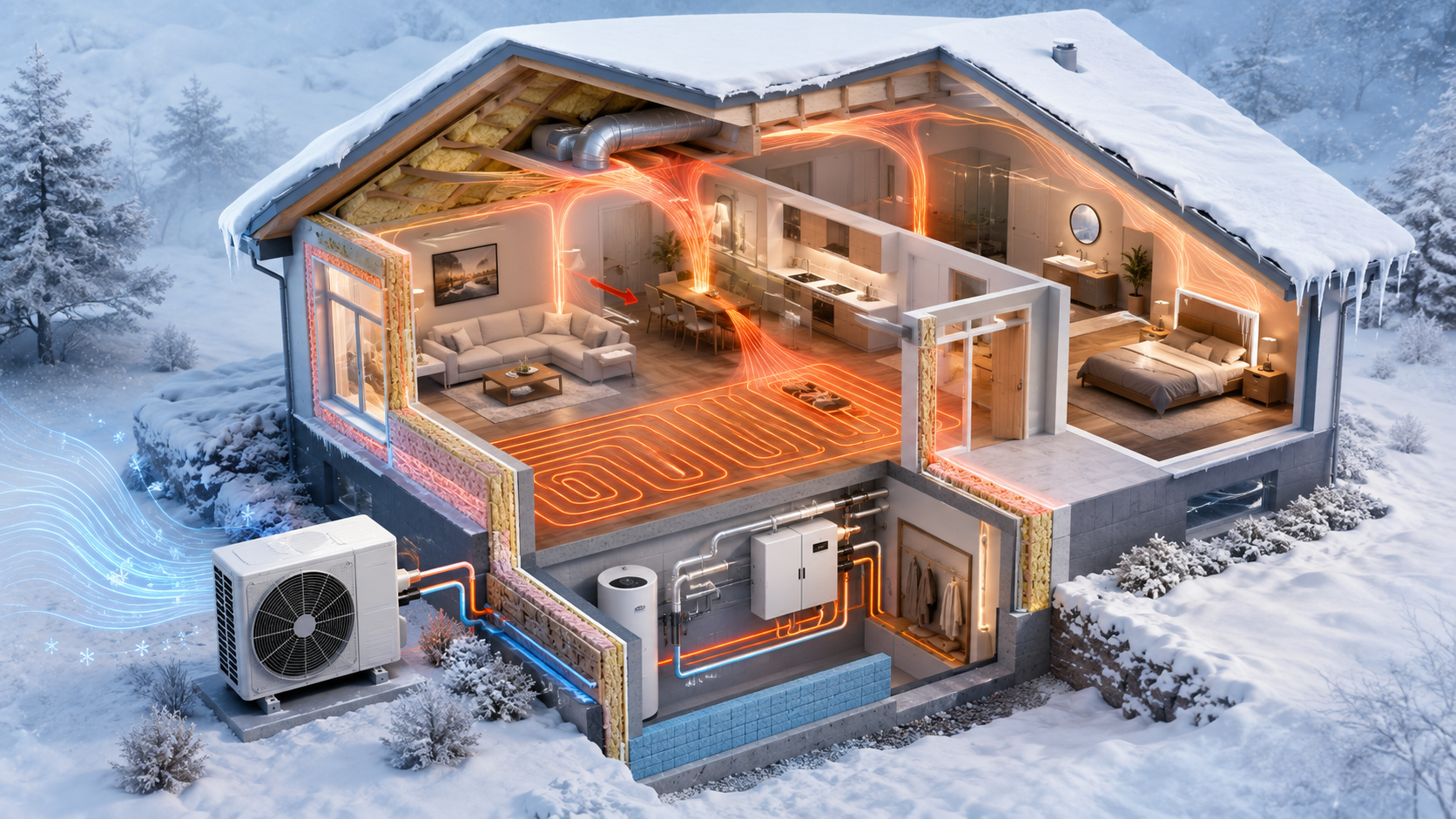
Cold-Climate Heat Pumps
One of the most common questions about heat pumps is simple: can they work in cold weather?
The answer is yes. Cold-climate heat pumps are designed to operate more effectively in colder outdoor temperatures than standard air-source heat pumps. This makes them especially useful in places with long winters, such as Canada.
Why Cold-Climate Heat Pumps Matter
Heating is one of the biggest energy needs in cold regions. Traditional systems often rely on natural gas, oil, propane, or electric resistance heating. Cold-climate heat pumps offer another option by using electricity to move heat instead of generating all heat directly.
Even when outdoor air feels very cold, it can still contain thermal energy. A cold-climate heat pump is designed to collect that available heat and transfer it indoors.
How They Are Different from Standard Heat Pumps
Cold-climate heat pumps are usually designed with improved compressors, better controls, and technology that helps maintain heating performance at lower temperatures.
This allows them to continue providing heat in colder conditions where some older or standard systems may become less effective.
Do They Need Backup Heating?
In some buildings and climates, a backup heating system may still be useful or necessary during extremely cold days. This does not mean the heat pump is not effective. It simply means the system should be designed for the building, climate, and comfort needs.
Backup heating may come from electric resistance heating, a furnace, boiler, or another system, depending on the project.
Why Building Insulation Is Important
A cold-climate heat pump performs best when the building envelope is efficient. Good insulation, air sealing, high-performance windows, and reduced heat loss can lower the heating demand.
This means the heat pump does not need to work as hard to keep the building comfortable. Before choosing a heat pump, it is helpful to look at the overall condition of the building.
Benefits of Cold-Climate Heat Pumps
Cold-climate heat pumps can provide efficient heating in colder regions. Many systems can also provide cooling in summer, making them useful throughout the year.
They can support lower-emission buildings, especially when powered by cleaner electricity. They can also improve comfort by providing steady heating instead of short bursts of heat.
Things to Consider Before Installation
Choosing the right system is very important. The heat pump should be properly sized for the building and selected based on the local climate.
Installation quality also matters. A good design should consider insulation, air leakage, window performance, ductwork or indoor unit location, backup heating needs, and the building’s heating load.
Final Thought
Cold-climate heat pumps help answer one of the biggest concerns about heat pump technology: winter performance. With the right system and proper installation, they can be a practical and efficient solution for heating buildings in colder climates.